

Few countries let you look for desert larks at dawn, shorebirds at midday, and mountain specialties the next morning. Morocco combines Atlantic wetlands, cedar forests, rocky passes, palm oases, and the Sahara within practical travel distances.
The range of Morocco birding tours makes the country appealing to first-time visitors and experienced listers alike. A good trip matches your target birds with the right season, regions, guide, and pace.
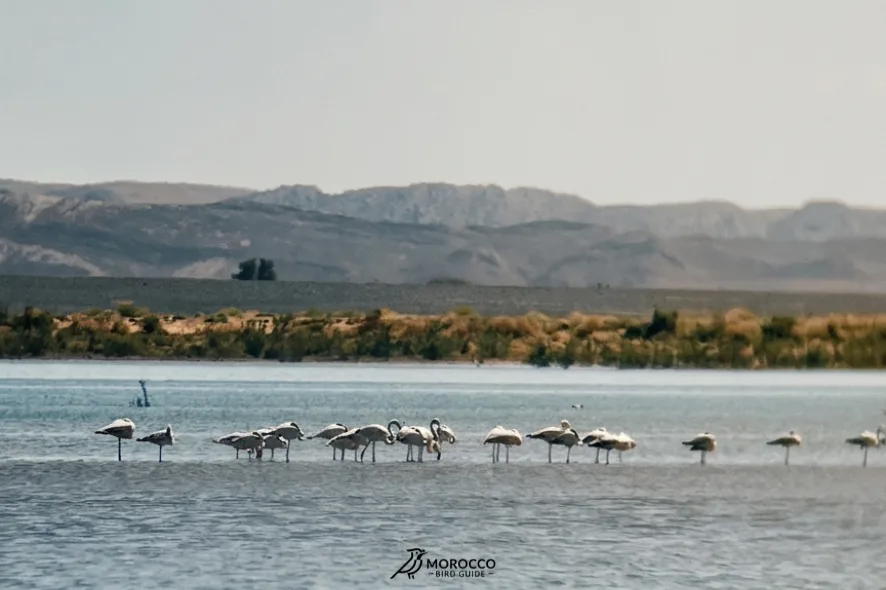
Morocco’s habitat variety is its strongest draw. Atlantic lagoons attract flamingos, waders, and wintering waterbirds. The Atlas Mountains hold species adapted to cold slopes and open valleys, while cedar forests support sought-after woodland birds. Farther southeast, gravel plains, acacia scrub, and dunes create habitat for desert specialists.
Birders may hope to find Northern Bald Ibis, Moussier’s Redstart, Levaillant’s Woodpecker, Desert Sparrow, Cream-colored Courser, Egyptian Nightjar, raptors, and a wide mix of shorebirds. A published Morocco birding trip list also shows the range of Northwest African specialties and Old World waders possible on a well-timed route.
Still, no species belongs on a guaranteed checklist. Weather, migration timing, water levels, and recent disturbance all affect what appears in the field.
Souss-Massa National Park near Agadir is a major stop for Northern Bald Ibis, wetland birds, and coastal species. Oued Massa and nearby Atlantic shorelines add gulls, terns, waders, and migrants. Wetlands at Oualidia, Sidi Moussa, and the lower Moulouya can be productive for waterbirds in the right season.
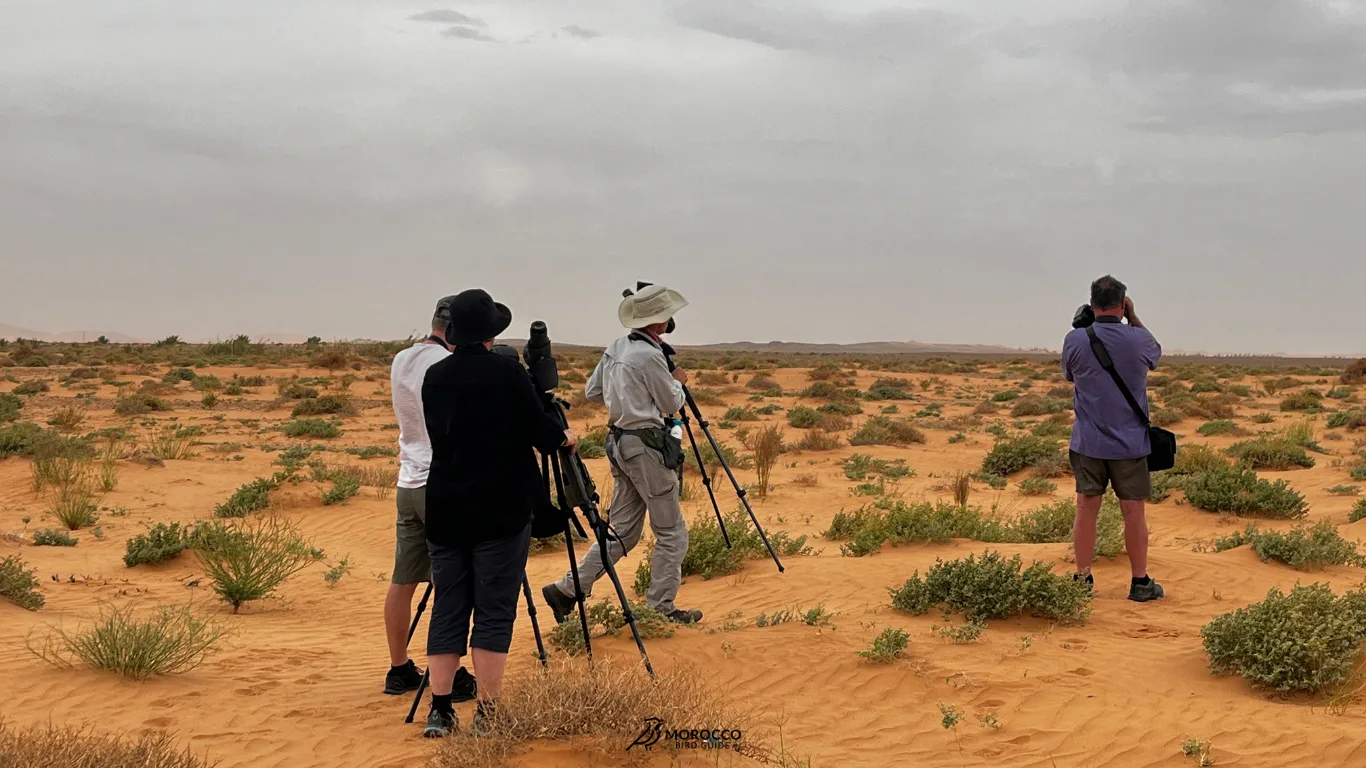
The High Atlas suits mountain species such as Moussier’s Redstart, while the Middle Atlas offers cedar forest birding and chances for Levaillant’s Woodpecker. Around Merzouga and the Draa Valley, open desert habitat can produce Desert Sparrow, coursers, sandgrouse, wheatears, and night birds.
A route should follow your priorities rather than chase every habitat. For example, this guided bird tour to Merzouga combines High Atlas and Sahara birding for travelers focused on desert species.
Spring is popular because migrants move through the country while many resident birds are active and vocal. Fall can also bring passage migrants through coastal and inland sites, often with less pressure on accommodations.
Winter favors wetlands, shorebirds, raptors, and birds escaping colder parts of Europe. Summer heat can limit lowland and desert birding, although mountain areas and resident desert species remain worthwhile. Choose dates for the birds you want most, not only for mild weather. In every season, the first hours after sunrise are usually the most productive.
Many Morocco birding tours fall into three formats: private custom trips, scheduled small-group departures, and broader wildlife or photography itineraries. A private trip gives you greater control. Small groups can reduce the per-person cost. Wildlife trips may suit casual birders, but they often devote less time to difficult targets.
A local birding guide adds more than bird identification. They know current site conditions, seasonal movements, access rules, safe stopping points, and which habitats deserve a second visit. Desert birding often depends on timing and local knowledge, as Morocco tour information for Atlas and Sahara habitats makes clear.
Before you book, ask about the leader’s birding background, group size, daily driving time, vehicle comfort, lodging, meals, airport transfers, park fees, and permits. Also ask what happens when a target species doesn’t show or weather changes the plan.
A bird-focused itinerary leaves room to listen, scan, revisit a promising site, and follow unexpected activity. A schedule packed with tourist stops can turn a birding day into hours inside a vehicle.
Private tours work well for photographers, couples, families, and serious birders with a short target list. You can linger at a feeding flock, take longer walks, or change plans when conditions improve. That freedom usually comes with a higher price.
Small groups offer shared sightings and a social atmosphere. Beginners often benefit from an experienced leader and fellow participants. However, group pace is less flexible, especially when people have different priorities.
Before committing, ask about:
Typical walking distances and terrain
Vehicle space, air conditioning, and window access
Accessibility needs and comfort breaks
The number of non-birding travelers
Tour costs depend on trip length, group size, vehicle type, guide experience, lodging level, season, and whether international flights are included. Compare the complete package, not the headline price.
Check whether accommodation, meals, local transport, entrance fees, permits, and airport pickup are included. A balanced itinerary may include coastal wetlands, time in the Atlas region, and several desert nights when those habitats fit your list. Long drives can cut heavily into field time, so a lower-priced tour isn’t always better value.
A four-hour transfer may be necessary, but repeated all-day drives leave little time for the quiet observation that finds hidden birds.
Bring reliable binoculars, a field guide or birding app, sun protection, sturdy walking shoes, a refillable water bottle, personal medication, and a power bank. A spotting scope helps at wetlands and open desert sites, although it isn’t essential for every traveler.
Layers matter. Mountain mornings can feel cold, while desert afternoons become hot quickly. A light jacket, hat, and breathable long sleeves cover most conditions.
Respect people as carefully as wildlife. Ask before photographing anyone, follow local customs, and learn a few French, Arabic, or Moroccan Arabic greetings. A guide to birds native to Morocco can also help you recognize the species and habitats you encounter.
Stay on permitted paths and follow your guide’s advice near nests, roosts, and protected areas. Keep a respectful distance, avoid playback unless a guide considers it appropriate, and never feed wildlife.
A target list helps shape a route, but it isn’t a promise. Experienced guides improve your odds, yet they can’t control wind, heat, migration, road access, or a bird’s behavior.
Share your priority species before booking, then leave room for common birds, changing light, local culture, and field skills. Ethical birding protects the habitats that make future trips possible.
Morocco brings coastal wetlands, mountain forests, and Saharan habitats into one rewarding journey. Choose a season around your target birds, select regions with purpose, compare private and group formats, and read the full list of included costs.
Build a focused target list before you book, then ask detailed questions about the guide and daily route. Flexible expectations and respectful field behavior will make the trip richer, whatever appears in your binoculars.
 Optimized by Seraphinite Accelerator