
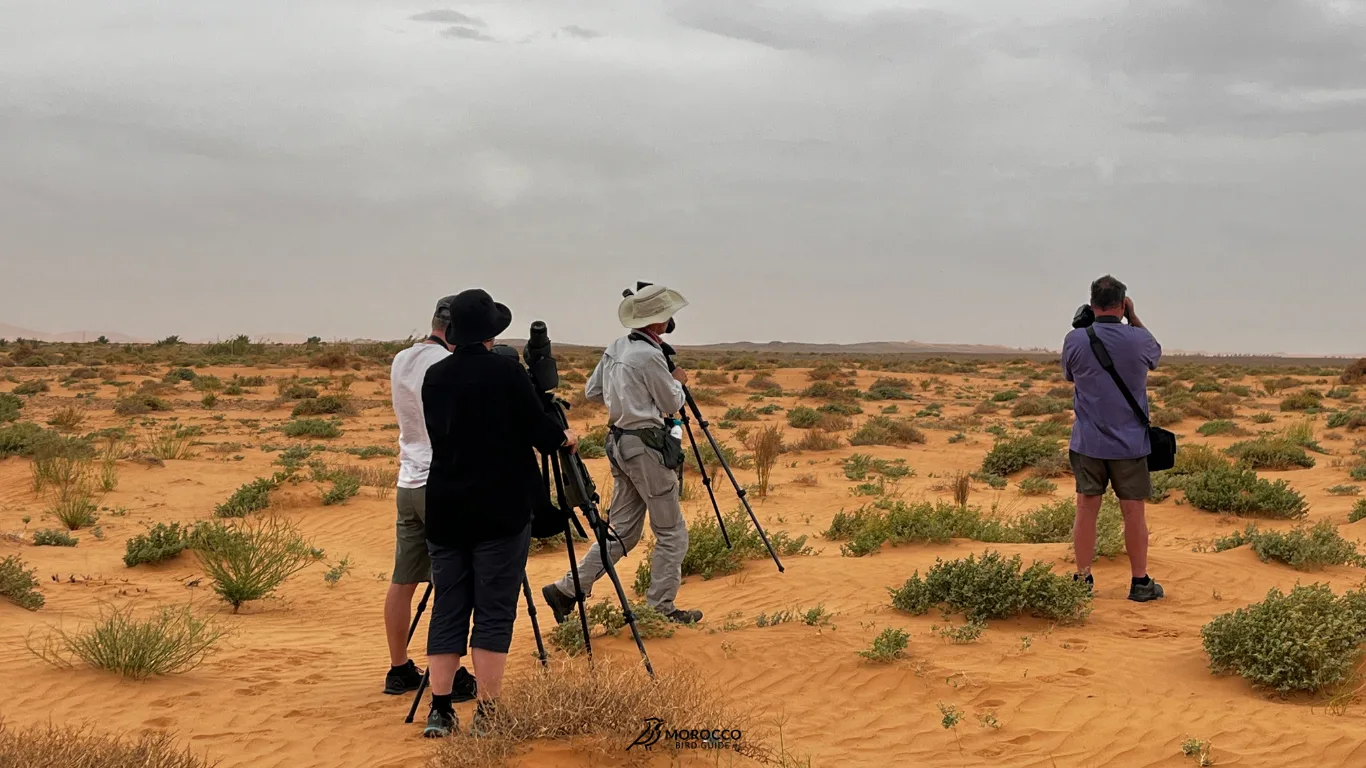
Morocco is one of North Africa’s most rewarding destinations for birdwatching. From Atlantic wetlands and coastal lagoons to the High Atlas Mountains, cedar forests, palm oases, and the vast Sahara Desert, the country offers an extraordinary variety of habitats and bird species. Morocco Birding Tours provide an opportunity to explore these different environments, discover North African specialties, and observe resident and migratory birds with knowledgeable local guidance.
At Morocco Bird Guide, we help travelers discover the country’s remarkable birdlife through carefully planned birdwatching experiences. Whether you are an experienced birder with a specific target list, a wildlife photographer, or a beginner interested in discovering new species, our tours can be adapted to your interests, travel dates, and available time.
Our Morocco Birding Tours are designed to help you discover the country’s best birdwatching locations, observe fascinating native species, and enjoy a personalized wildlife experience with carefully planned routes.
From searching for the Northern Bald Ibis along the Atlantic coast to observing desert specialists around Merzouga, every region offers something different. With suitable locations, flexible itineraries, and local knowledge, Morocco Birding Tours can make your birdwatching holiday more rewarding and enjoyable.
Morocco’s geographical position between Europe and Africa makes it an important destination for resident birds and seasonal migrants. Its varied climate, elevation, and natural landscapes support a remarkable diversity of birdlife. Coastal wetlands, mountain forests, agricultural areas, rocky plateaus, and desert habitats each attract different species.
One of the main advantages of Morocco Birding Tours is the opportunity to explore several habitats during a single trip. You can observe waterbirds and waders along the Atlantic coast, search for mountain specialists in the Atlas ranges, and discover desert-adapted birds in the Sahara.
Some of the interesting species to look for during a birdwatching holiday include:
Bird sightings depend on season, weather, habitat conditions, and natural bird movements. A well-planned route helps you visit suitable locations for your target species while allowing enough time for observation and photography.
The best Morocco Birding Tours combine different regions to provide a varied birdwatching experience. Each destination has its own habitats, characteristic species, and seasonal opportunities. The right route depends on the birds you hope to see, your travel dates, and the number of days available.
Marrakech is an excellent starting point for exploring the High Atlas Mountains and surrounding countryside. A relatively short journey from the city takes visitors from gardens and agricultural landscapes to rocky mountain slopes, valleys, and higher-altitude habitats.
The region around Oukaïmeden is particularly interesting for birdwatchers searching for mountain species. Depending on the season and conditions, possible sightings include African Crimson-winged Finch, Atlas Wheatear, Atlas Horned Lark, Alpine Chough, and other birds adapted to high elevations.
Atlas Mountains birdwatching can also include visits to woodland areas and mountain valleys where Moussier’s Redstart, Levaillant’s Woodpecker, and other North African specialties may be found. Early morning visits are often useful because birds can be more active during cooler hours.
Travelers interested in the birds of Marrakech can explore gardens, agricultural areas, nearby valleys, and mountain routes. These locations offer opportunities to observe both familiar garden birds and species associated with the surrounding natural habitats.
Our birds of Marrakech tours are a suitable option for visitors who want to discover the region without committing to a long journey across Morocco. You can also include Marrakech in a longer mountain and desert itinerary.
The Sahara Desert is one of Morocco’s most fascinating birdwatching environments. Around Merzouga and Erg Chebbi, sandy dunes, dry riverbeds, gravel plains, and scattered vegetation create habitats for birds specially adapted to arid conditions.
Sahara Desert birdwatching is particularly attractive to birders interested in specialized desert species. Depending on the location and time of year, possible sightings include Desert Sparrow, Greater Hoopoe-Lark, Cream-colored Courser, Trumpeter Finch, African Desert Warbler, and different wheatears.
The surrounding plains and rocky areas are also important for finding desert larks. If you are researching desert lark birds of Morocco, several interesting species deserve attention, including Greater Hoopoe-Lark, Thick-billed Lark, and Temminck’s Lark. These birds have different habitat preferences, so exploring more than one desert location can improve your chances of discovering a wider variety of species.
The Tagdilt Track near Boumalne Dades is another important destination for birdwatchers interested in desert and steppe species. Its open, stony landscape is well known for larks, wheatears, and other birds adapted to dry conditions.
Night birding can add another dimension to a desert journey. With appropriate local guidance and responsible observation, visitors may have opportunities to search for nocturnal species such as the Egyptian Nightjar. Sightings are never guaranteed, but carefully selected locations and suitable timing can make the experience more rewarding.
The Atlantic coast offers a completely different birdwatching experience, with estuaries, coastal lagoons, wetlands, beaches, and areas of natural scrub. The Souss-Massa region, south of Agadir, is particularly important for bird conservation and is one of the country’s most interesting areas for observing coastal species.
Souss-Massa National Park and the surrounding coastline are especially important for the Northern Bald Ibis. Birdwatchers may also encounter Greater Flamingo, Marbled Duck, gulls, terns, waders, and other waterbirds depending on the season and local conditions.
The coastal location around Tamri is particularly well known for the Northern Bald Ibis. Oued Massa and Oued Souss also provide valuable wetland habitats for resident and migratory birds.
Including the Atlantic coast in Morocco Birding Tours is an excellent option for travelers who want to discover more than mountain and desert species. It adds coastal and wetland habitats to the itinerary and provides opportunities to observe a wider range of bird families.
The Middle Atlas provides another valuable birdwatching region, with cedar forests, oak woodlands, lakes, and open mountain landscapes. Around Ifrane, Azrou, and nearby protected areas, birdwatchers can explore habitats that are very different from the southern desert.
Woodland species are among the main attractions of this region. Levaillant’s Woodpecker is a particularly interesting target, while other forest birds may include Atlas Flycatcher, tits, finches, and seasonal visitors.
The Middle Atlas can be included in longer Morocco Birding Tours for travelers who want to explore northern and central Morocco in addition to the Sahara and Atlantic coast.
Morocco is an exciting destination for wildlife photographers because its varied landscapes provide opportunities to photograph birds in very different natural environments. From flamingos and shorebirds in coastal wetlands to larks and wheatears in the desert, each region offers different photographic subjects.
Morocco wildlife photography can be particularly rewarding around Merzouga, the Atlas Mountains, and Souss-Massa. Open landscapes may provide clear views of desert birds, while wetlands can offer opportunities to photograph waterbirds in their natural surroundings.
For bird photography, a camera with a suitable telephoto lens, binoculars, and patience are useful. Early morning and late afternoon often provide softer light and more comfortable conditions for observing wildlife.
Our Morocco Birding Tours can be adapted for travelers who want to spend additional time photographing particular species. We can help plan suitable stops and allow flexibility for observation rather than rushing between destinations.
Morocco offers birdwatching opportunities throughout the year, but the best time to travel depends on your target species, preferred habitats, and the regions included in your itinerary. Spring and autumn are particularly interesting for migration, while winter can be rewarding for observing waterbirds along the coast.
Spring is one of the most attractive periods for birdwatching in Morocco. Resident species become active during the breeding season, while migratory birds pass through the country between their wintering and breeding areas.
The combination of resident specialties and seasonal migrants makes spring particularly interesting for exploring the Atlas Mountains, desert regions, and Atlantic wetlands.
Autumn is another important migration period. Many birds travel south toward their wintering grounds, creating opportunities to observe passage migrants in wetlands, coastal areas, and inland habitats.
This season can be a good choice for birdwatchers interested in migration and a combination of resident and visiting species. The exact timing and number of birds vary with weather conditions and migration patterns.
Winter can be rewarding for observing waterbirds and wintering migrants, particularly along the Atlantic coast and at suitable wetlands. Cooler temperatures can also make exploring some desert areas more comfortable than during the hottest months.
Summer requires more careful planning, especially in the lowlands and Sahara, where daytime temperatures can become very high. Mountain locations may provide more comfortable conditions, although birding opportunities differ from those in spring and autumn.
Understanding bird migration can help you choose a travel period that matches your interests and target species.
Every birdwatcher has different priorities. Some travelers want to photograph a particular species, while others prefer to explore as many habitats as possible. Private birdwatching tours offer flexibility when planning routes, choosing birding locations, and deciding how much time to spend in each destination.
Our private Morocco Birding Tours can be planned around your travel dates, target species, accommodation preferences, and available budget. You can focus on the Atlas Mountains, explore the Sahara around Merzouga, visit important coastal wetlands, or combine several regions in one extended journey.
Depending on your requirements, a birdwatching itinerary can include:
Whether you are planning a short birdwatching break or a longer wildlife holiday, we can help you develop an itinerary that makes the most of your time in Morocco.
Selecting the right itinerary is just as important as choosing the destination. Before booking, consider which species you want to observe, how many days you can travel, and whether you prefer a focused trip or a route covering several regions.
For example, a short trip from Marrakech may be suitable for exploring nearby mountain habitats and local birding locations. A longer journey can combine the High Atlas, Middle Atlas, Tagdilt Track, Merzouga, and Atlantic wetlands for a broader experience of Moroccan birdlife.
When comparing birding tours in Morocco, pay attention to the following details:
A good itinerary should balance travel time with proper opportunities for bird observation. Spending enough time in suitable habitats is often more valuable than rushing between too many destinations.
Preparing the right equipment will make your birdwatching experience more comfortable and productive. Morocco’s environments vary considerably, so your equipment and clothing should be suitable for the regions and seasons you plan to visit.
We recommend bringing:
It is also useful to bring a notebook or digital checklist to record observations, locations, and species identified during your trip.
Responsible birdwatching is essential for protecting Morocco’s natural habitats and wildlife. Many birds are sensitive to disturbance, particularly during nesting and breeding periods. Observing them carefully helps preserve their natural behavior and reduces the impact of tourism.
During your trip, maintain a respectful distance from birds, avoid disturbing nests, follow protected-area regulations, and never feed wild birds. Photography should also be carried out responsibly, without approaching animals too closely or disrupting their normal activities.
Choosing knowledgeable local guides and respecting conservation areas can contribute to more sustainable tourism. Your visit can also support local communities that depend on responsible nature-based travel.
From the Northern Bald Ibis along the Atlantic coast to Moussier’s Redstart in the Atlas Mountains and Desert Sparrow in the Sahara, Morocco offers an impressive variety of birdwatching opportunities. Each region has something different to discover, making the country an excellent choice for a wildlife holiday.
If you are planning Morocco Birding Tours, we would be happy to help you choose a route based on your travel dates, target species, preferred destinations, and budget. Whether you are interested in a short trip from Marrakech, a desert birdwatching experience around Merzouga, or a longer journey combining several regions, we can help you plan a suitable experience.
Tell us how many days you have available, when you would like to travel, and which birds you hope to see. We can then suggest an itinerary with carefully selected birding locations and transportation arrangements.
Explore our Morocco birding tour and discover the possibilities for your next birdwatching holiday. You can also browse our birds of Marrakech tours to find experiences focused on the region.
Start planning your birdwatching journey with Morocco Bird Guide and discover the remarkable birds, landscapes, and wildlife of Morocco.